Where Does Radon Come From? What are the Health Risks?
Radon is a colorless, odorless radioactive gas that forms naturally in the soil and can seep into homes through cracks and openings in the foundation. Long-term exposure to elevated radon levels is a serious health concern. The U.S. Environmental Protection Agency (EPA) estimates that radon causes about 21,000 lung cancer deaths in the U.S. each year, and people who smoke are at an even higher risk when exposed. In fact, radon is the leading cause of lung cancer among non-smokers. Because you can’t see, smell, or taste it, the only way to know your risk is through professional testing and mitigation.
2/5
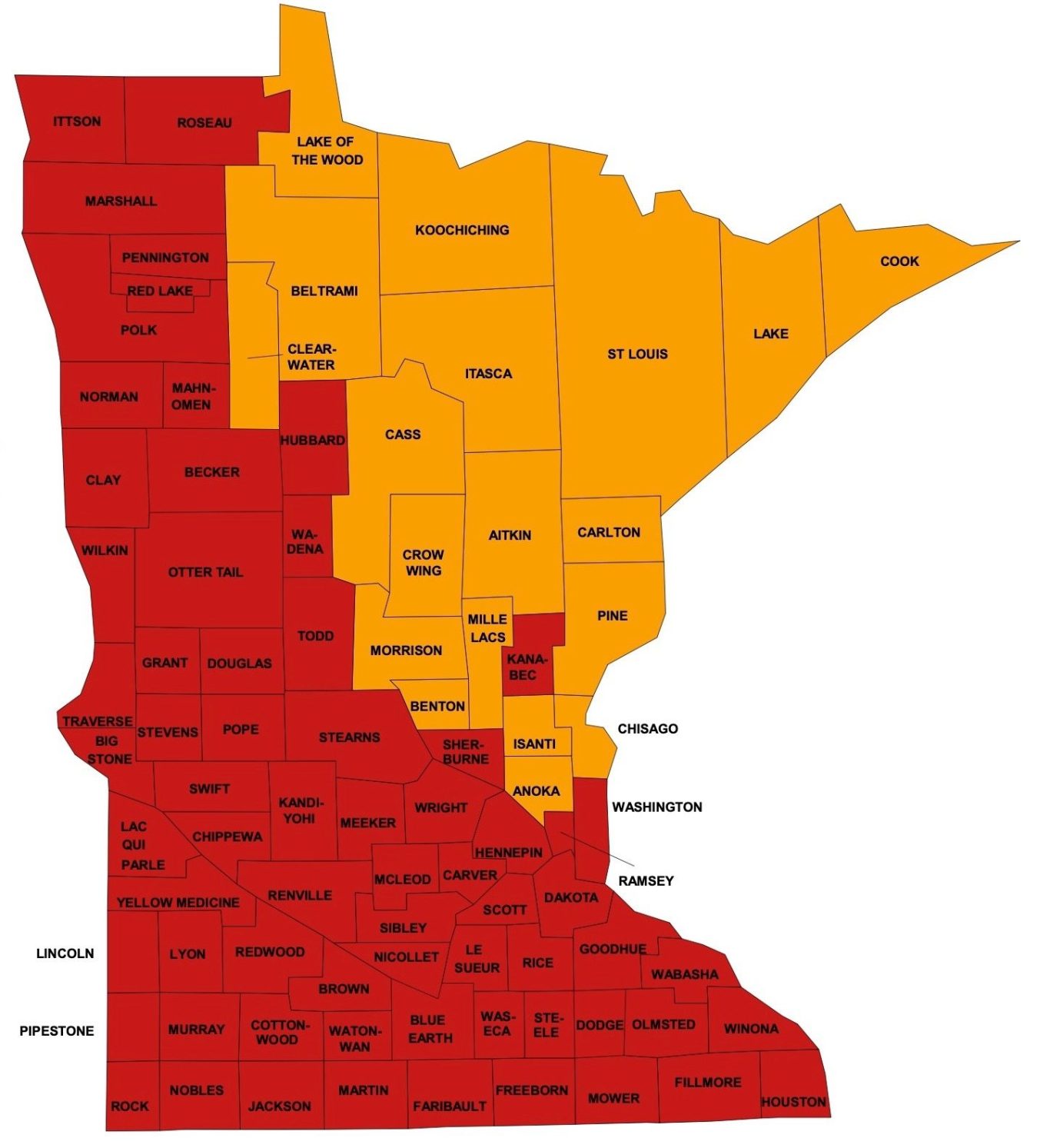
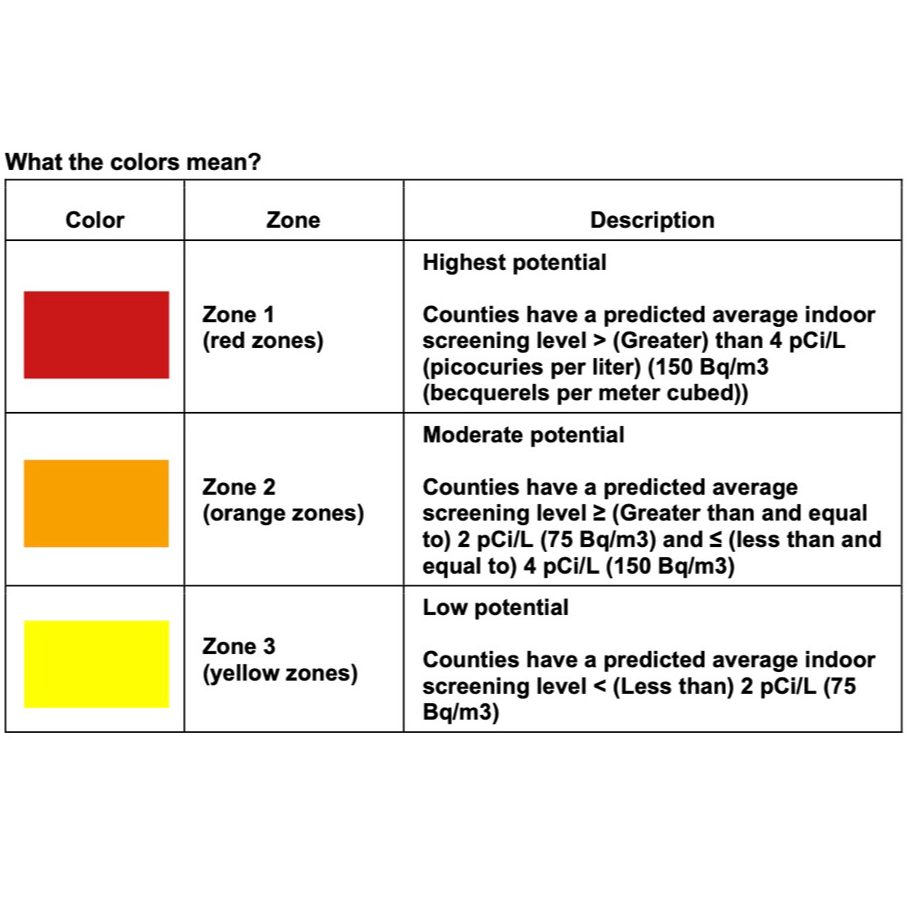
Homes With Elevated Radon in MN
The average radon level in Minnesota is more than three times higher than the U.S. radon level. This is due to our geology and how our homes are operated.
4.0
Recommended Radon Mitigation Level (pCi/L)
Any radon level poses some health risk. MDH recommends installing a radon mitigation system when the radon level is at 4 pCi/L or higher.
21,000
Radon Induced Lung Cancer Deaths per year
It is the number one cause of lung cancer for non-smokers and the second leading cause of lung cancer in smokers. Your risk for lung cancer increases with higher levels of radon and longer periods of exposure.
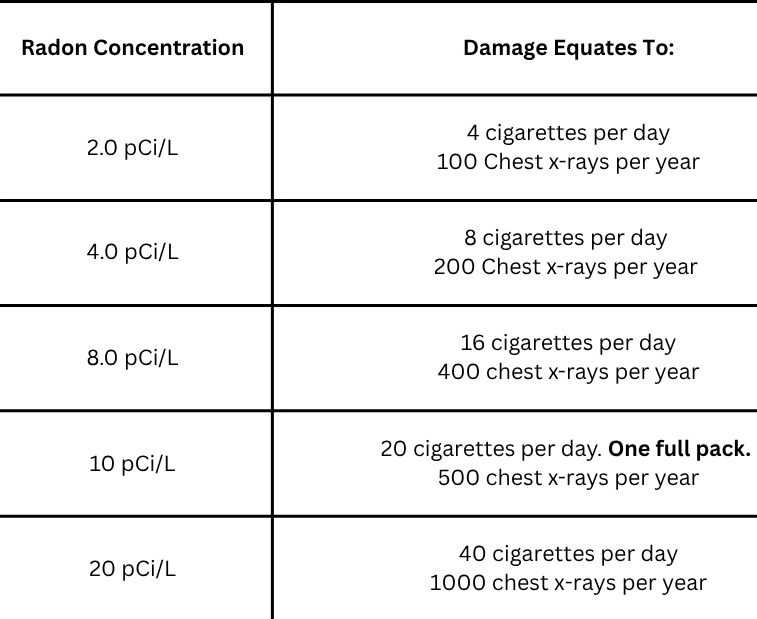
KNOW YOUR NUMBER
Radon is invisible but can be very dangerous. The EPA recommends action at 4.0 pCi/L.
To understand the risk, 2.0 pCi/L is like smoking 4 cigarettes a day or getting 100 chest X-rays a year.
At 4.0 pCi/L, it is like 8 cigarettes a day or 200 X-rays.
At 10.0 pCi/L, the risk is even higher, equal to a full pack of cigarettes every day or 500 chest X-rays a year.
Testing your home is the best way to protect your health.